10 Best Sectional Garage Doors for Global Buyers
Choosing the right sectional garage door is no longer a simple matter of color, panel design, or price. Global buyers must compare insulation, wind resistance, hardware quality, safety controls, service access, and regional compatibility. A door facing tropical rain needs different protection from one exposed to freezing winters, coastal salt, or strong seasonal winds.
Industry data supports this wider view. Fortune Business Insights estimates that the global garage door market will grow steadily through 2032, supported by residential construction, renovation, and automated access systems. Grand View Research also identifies replacement demand and smart-home integration as important market drivers. However, published estimates differ because researchers define “garage door” differently. That uncertainty deserves attention.
Performance matters more than marketing language. A credible sectional garage door should provide documented cycle testing, clear thermal specifications, reliable seals, and suitable wind-load information. Buyers should check whether products align with recognized requirements, such as EN 13241 in relevant European markets or UL 325 safety principles in the United States. Local certification still comes first.
Small details often decide long-term value. Look closely at hinge protection, roller movement, bottom seals, spring access, and panel thickness. A door may open quietly in a showroom yet perform poorly after dust, humidity, or repeated temperature changes. That happens.
This guide reviews ten leading options for global buyers. It considers practical installation conditions, energy performance, security features, maintenance needs, warranty clarity, and supplier reliability. The ranking is useful, but not absolute. Climate, garage architecture, installer skill, and spare-parts availability can change the best choice. Expect trade-offs, not miracles.
What Defines a High-Quality Sectional Garage Door
10 Best Sectional Garage Doors for Global Buyers
What Defines a High-Quality Sectional Garage Door
A high-quality sectional garage door starts with measured performance, not attractive photography. DASMA technical guidance emphasizes tested U-factor and R-value figures. These values should come from recognized procedures, such as ASTM C1363 or ASTM C518. For European projects, EN 13241 and EN 12424 provide useful safety and performance references. Ask for test conditions. Numbers without conditions can mislead buyers.
The door should also close evenly, with panels meeting tightly across the opening. A continuous bottom seal matters in windy or dusty areas. The U.S. Department of Energy reports that air leakage can represent 25% to 40% of a building’s heating and cooling energy use. A garage door is only one part of that problem, but poor seals waste comfort and money. Small gaps become obvious during rain. I have seen doors with thick panels but weak perimeter seals.
Hardware reveals practical quality. Galvanized hinges, corrosion-resistant springs, and properly balanced rollers support longer service life. Safety testing should address pinch protection, emergency release, and automatic reversal. Local climate changes the specification. Coastal buyers need stronger corrosion resistance, while cold regions may prioritize thermal breaks. A perfect door does not exist. Even a well-tested model can perform poorly if installers ignore alignment, drainage, or maintenance. Global buyers should request installation tolerances, warranty terms, spare-part availability, and independent test documents before comparing the top ten.
Key Selection Criteria for Global Buyers
10 Best Sectional Garage Doors for Global Buyers
Global buyers should begin with the building, not the catalog. Measure the opening, headroom, side clearance, and interior depth carefully. Measure twice. A sectional garage door must match local climate conditions, too. In coastal areas, corrosion-resistant hardware and sealed panels matter. In cold regions, strong insulation reduces heat loss. For hot climates, reflective surfaces and controlled ventilation can improve comfort. Check the door’s wind-load rating against local construction requirements. Do not rely on appearance alone.
Safety and service support deserve equal attention. Look for tested reversing systems, finger-protection features, secure locking, and durable lifting components. Ask for documented performance data, installation instructions, and maintenance schedules. Confirm that replacement springs, rollers, seals, and remote controls can reach your market. Import costs may change the real price. A lower purchase quote can become expensive after freight, duties, fitting, and repairs. Local installers should understand sectional door tension systems and electrical requirements.
Tips: Request a written specification sheet before ordering. Compare panel thickness, insulation value, cycle rating, noise level, and warranty terms. Check whether the warranty covers labor and international shipping. Inspect sample finishes in natural light, because online colors can mislead. I have found that buyers often focus on the panel design and overlook headroom limitations. That mistake is easy to make. It is also costly to correct. When specifications seem unclear, pause and ask for engineering drawings and verified test records.
Ten Leading Sectional Garage Door Options Compared
Ten Leading Sectional Garage Door Options Compared
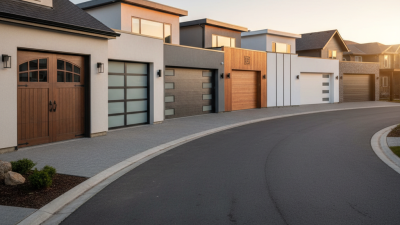
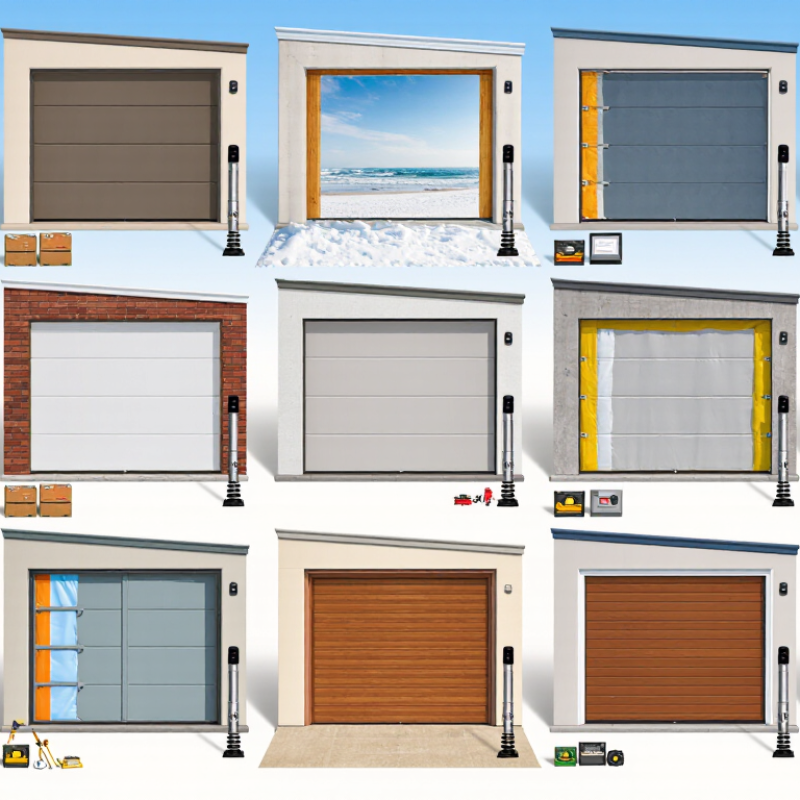
Global buyers should compare more than appearance. The ten leading options are insulated steel, non-insulated steel, aluminum full-view, solid wood, engineered wood, composite, fiberglass, high-speed sectional, fire-rated sectional, and thermally broken aluminum. Each suits a different building. Insulated steel usually offers strong value for cold warehouses and attached garages. Non-insulated steel costs less, but transfers heat quickly. Full-view aluminum brings daylight, although its panels can dent more easily.
Solid wood delivers warmth and visual depth. It also needs regular sealing. Engineered wood and composite panels resist moisture better, but quality varies between suppliers. Fiberglass remains light and corrosion-resistant near coastal sites. High-speed sectional doors support busy logistics areas, where frequent cycling matters. Fire-rated models require certified testing and correct installation. They are not interchangeable with ordinary doors. Thermally broken aluminum improves energy performance, but usually demands a larger budget.
The International Energy Agency reports that buildings consume about 30% of global final energy. Door insulation cannot solve that alone. However, the U.S. Department of Energy recommends reducing air leakage around openings, which makes seals, guides, and installation critical. I check panel thickness, stated U-value, cycle rating, wind-load data, spare-part access, and local compliance before purchasing. European projects may reference EN 13241, while other markets use different standards. My ranking is not universal. A cheaper door may become expensive after repeated repairs. One weakness remains: published performance data is not always measured under identical conditions. Compare test methods, not just numbers.
Materials, Insulation, Safety, and Smart Features
10 Best Sectional Garage Doors for Global Buyers: Materials, Insulation, Safety, and Smart Features
The ten best sectional garage doors balance climate, structure, and daily use.
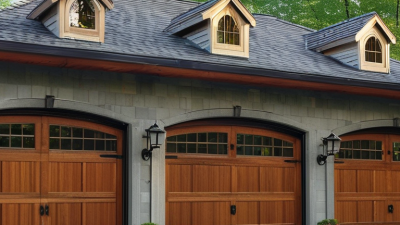
Steel panels offer strong impact resistance and low maintenance. Aluminum suits coastal areas, but dents more easily. Timber provides warmth, yet it needs regular sealing in humid climates.
The IEA’s Buildings 2023 report states that buildings consume about 30% of global energy. Insulation therefore matters, especially when garages connect to living spaces. Polyurethane cores usually provide better thermal performance than basic polystyrene. However, a higher R-value does not guarantee better results. Poor seals can defeat expensive insulation.
Tips: Ask for tested U-values, panel thickness, wind-load ratings, and replacement-part availability. Check the door’s resistance to moisture, salt, and temperature changes.
The U.S. Consumer Product Safety Commission has historically estimated about 20,000 garage-door-related injuries annually. Photo eyes, automatic reversal, manual release, and pinch-resistant joints are essential. UL 325 and EN 13241 provide useful regional safety references, but local installation rules still apply.
Smart openers should support encrypted communication, activity alerts, and controlled user access. NISTIR 8259A recommends secure configuration, software updates, and device identification for connected products.
Choose systems with reliable offline operation; internet outages happen. A door that opens manually is not outdated. It is practical.
Installers should balance spring tension, travel limits, and emergency release settings during commissioning. Specifications can look perfect on paper, but real performance depends heavily on fitting accuracy and maintenance discipline.
Installation, Maintenance, Standards, and Long-Term Value
A sectional garage door should match local conditions, not just showroom dimensions. Measure the opening, headroom, side clearance, and floor slope before choosing a panel system. Measure twice. Small errors matter.
Installation quality affects safety, insulation, and daily operation. Use a trained installer who understands regional building codes, wind-load requirements, electrical rules, and emergency access standards. Standards differ between countries, so buyers should request documented compliance and manufacturer test data. The door should move smoothly by hand before the opener is connected. Misaligned tracks, loose fasteners, or uneven cables can create noise and early wear. A level floor seal also helps limit rain, dust, and insects.
Maintenance is usually simple but must remain regular. Inspect rollers, hinges, cables, and springs several times each year. Clean the tracks without adding heavy grease, because sticky residue can collect grit. Test the auto-reverse function with a solid object placed beneath the closing door. Never adjust high-tension springs without professional training. In coastal areas, rinse exposed hardware more often to reduce corrosion. Cold climates may need better seals and flexible materials, while hot regions require attention to ultraviolet damage and panel expansion. Insulated panels can lower heat transfer, but their value depends on climate, usage, and installation accuracy. A costly door is not automatically a durable one. Keep service records, although many owners remember this only after a fault appears.
10 Best Sectional Garage Doors for Global Buyers
Typical thermal performance and design cycle ratings by door configuration
How to read this chart: Insulated steel and high-cycle steel configurations generally provide the strongest balance of thermal efficiency, durability, and long-term value. Full-view aluminum and timber doors can offer distinctive architectural benefits, but their thermal performance and maintenance requirements vary by design.
Important buying note: R-values and cycle ratings are typical market ranges, not universal specifications. Buyers should verify the tested values, wind-load classification, safety requirements, and installation documentation for their country. Common references include EN 13241, ASTM F2200, UL 325, and AS/NZS 4505.