Top 10 Overhead Door Installation Tips for Buyers
Choosing a new garage door involves more than comparing colors and prices. An overhead door must fit the opening, clear the ceiling, and suit how the household uses the garage. Small details matter. A low beam, uneven floor, or nearby pipe can affect the track layout and available door options. Measure carefully.
These ten buyer tips focus on practical decisions that are easy to miss in a showroom. Check the opening width and height, side room, and headroom before requesting a quote. Consider how often the door will operate, whether insulation is useful, and how much daylight you want through its windows. Ask how the door’s weight and spring system match the opener. Do not assume an existing opener will work with every new door.
A site visit can reveal issues that photographs cannot, such as sloped flooring or limited clearance around stored equipment. Request an itemized estimate covering the door, hardware, removal, installation, and any expected adjustments. Confirm the installer’s experience, warranty terms, and service process in writing. Requirements and product options vary by location, so verify details with qualified local professionals. A polished quote still deserves questions.
The right overhead door installation depends on the building as much as the product. These tips help buyers compare proposals, spot unclear assumptions, and plan for a safer, smoother project. Even careful planning can miss something. Recheck measurements and access before ordering; changing course later may be frustrating.
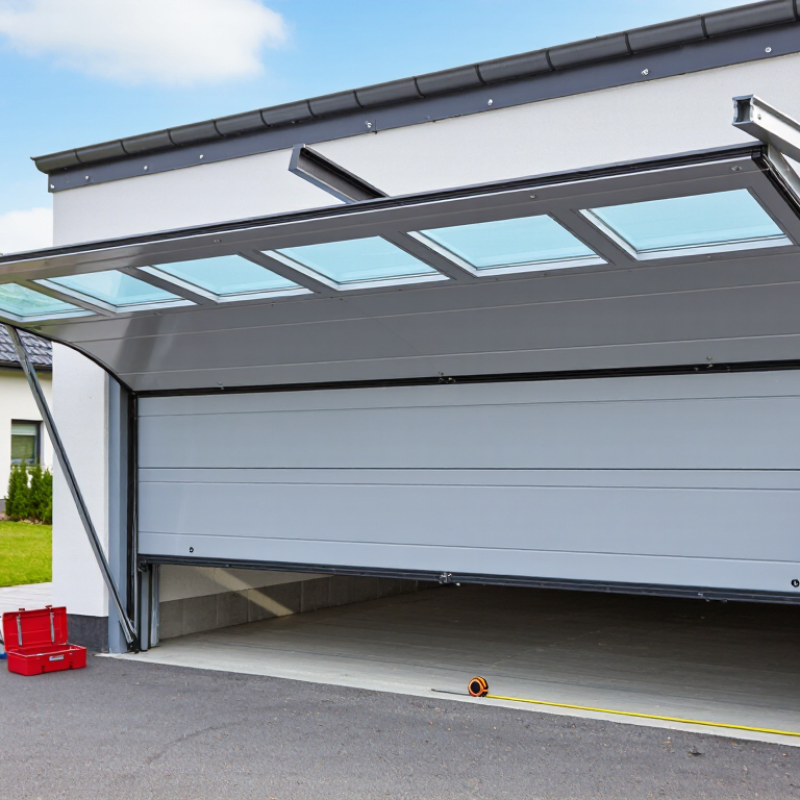
Measure the Opening, Headroom, and Sideroom Against Manufacturer Specs
Before choosing an overhead door, measure the opening itself—not just the old door. Record the width at the top, middle, and bottom, then measure the height on both sides. Walls and floors are not always square. Use the smallest useful opening measurements, and note any trim that could interfere with the new door.
Headroom is the clear distance from the top of the opening to the ceiling or nearest obstruction. Measure it at several points, especially near lights, beams, and pipes. Sideroom is the space between each edge of the opening and the nearest wall or obstacle. Check for switches, shelving, and stored items. Small differences matter. Compare all three measurements with the door and track manufacturer’s installation specifications; required clearances can vary by door style, track arrangement, and opener.
Write the measurements down, including where each was taken. A sketch can help, but label obstacles clearly. Do not guess. Even careful measurements can feel more certain than they are, particularly in older garages with uneven floors or angled framing. If a clearance is close to the stated minimum, remeasure and ask a qualified installer to verify the site before ordering. A few extra minutes with a tape measure can prevent a door that binds, lacks clearance, or cannot be installed as planned.
Overhead Door Installation: Example Measurement Checklist
Example survey for a nominal 16 ft × 7 ft door. Opening dimensions are shown in inches; headroom and sideroom are illustrative site measurements, not universal requirements.
Measure the clear opening width and height, vertical headroom above the opening, and sideroom on both sides. Compare every measurement with the selected door and track system’s manufacturer specifications before buying; required clearances vary by model and track type.
Compare Insulation Using ANSI/DASMA 105-Tested R-Values
When comparing overhead doors, ask for the complete-door R-value tested under ANSI/DASMA 105, not just the insulation’s advertised rating. The standard provides a consistent method for measuring garage-door thermal performance. A foam-core figure alone may omit joints, edges, and other heat-loss paths. Those details matter on a cold morning.
The U.S. Department of Energy’s Energy Saver guidance explains that higher R-values indicate greater resistance to heat flow. For a simple comparison, a tested R-12 door offers twice the nominal resistance of an R-6 door, assuming comparable test methods and assemblies. Check that assumption. Look for the test standard, the reported value, and whether the result applies to the whole door. Then weigh insulation against local weather, attached living space, and how often the door opens. A warm hand near a panel seam can reveal drafts, but it cannot replace a laboratory result. I would still verify the test documentation; labels can make unlike measurements look comparable.
Match Wind-Rated Doors to Local Codes and ASCE 7 Design Loads
A wind-rated overhead door must match the loads at its actual site, not a generic regional label.
ASCE 7 sets methods for determining wind loads, while local codes specify which edition applies. Use the ASCE Hazard Tool to check site-specific wind speed and risk category. Exposure, building height, terrain, and nearby obstructions also affect the design pressure. Small details matter.
NOAA’s 2023 U.S. Billion-Dollar Weather and Climate Disasters report recorded 28 events, with estimated losses of $92.9 billion. That figure is not a door-design value, but it shows why local wind risk deserves careful attention. FEMA’s P-804 Wind Retrofit Guide for Residential Buildings also identifies garage doors as vulnerable openings; a failed door can increase internal pressure and stress the roof. Not just the panel. Tracks, anchors, jambs, and surrounding framing must carry the specified loads too.
Before ordering, ask the building department which code edition governs the project. Then compare the door’s approved positive and negative pressure ratings with the project’s required component-and-cladding pressures. Confirm the tested door size matches your opening. A rating for a smaller assembly may not apply. Keep the product approval and load calculations with the permit documents, and ask a qualified designer to review unusual exposure or large openings. I have seen buyers focus on the door label and overlook the attachment details. That is an easy mistake.
Require UL 325-Compliant Openers with Entrapment-Protection Devices
When comparing overhead-door bids, require an opener certified to UL 325 and ask which entrapment-protection devices are included. UL 325 sets safety requirements for door operators, including protection against trapping someone beneath a closing door. The U.S. Consumer Product Safety Commission’s historical review recorded 46 deaths and 18 injuries linked to garage-door entrapment between 1982 and 1990. Those figures are not a measure of today’s risk, but they explain why safeguards matter.
Look for photoelectric sensors near the floor, plus an automatic reversal system that responds to resistance. Ask the installer to interrupt the sensor beam while the door closes. It should stop and reverse. Then test the reversal feature with the procedure in the owner’s manual; never use a person or pet as a test object. Small details matter. Sensors can be knocked out of alignment by a broom or storage bin. Ask for a demonstration, the compliance documentation, and clear instructions for monthly checks. A successful test is only a snapshot. Dust, loose wiring, or later adjustments can change performance, so I would not treat installation-day results as permanent proof.
Benchmark Quotes Against the 2024 Report’s 194% Garage-Door Cost Recoupment
When comparing overhead door installation quotes, use the 2024 Cost vs. Value Report as a benchmark, not a promise. Its national estimate for an upscale garage-door replacement showed a 194% cost recoupment: estimated resale value exceeded the project cost. That is striking. But it is not cash guaranteed at sale, and it may not reflect your neighborhood, home, or final quote.
Ask each installer to itemize the door, removal, tracks, hardware, labor, and disposal. Check whether insulation, windows, weather seals, and opener adjustments are included. A low quote can omit details that later raise the bill. Get measurements in writing, and confirm the proposed door fits the opening and existing structure. If one estimate is far below the others, ask what has been left out.
The report’s figure is most useful when your current door is dented, noisy, or visibly dated, and local buyers value curb appeal. Still, resale estimates are averages; they do not account for every home’s condition or sale timing. I would compare quotes against the report, then weigh appearance, durability, and warranty terms. A small regret: choosing the cheapest finish can look sensible today, but mismatched colors may stand out beside fresh exterior paint.