What Is an Overhead Door Opener and How Does It Work?
An overhead door opener is more than a motor above a garage. It is a coordinated system of controls, sensors, and moving parts that guides a heavy door along its tracks. Press the wall button or remote, and the opener’s motor turns a drive mechanism—often a belt, chain, or screw. That mechanism moves a trolley connected to the door. The door rises. It pauses at the limit. Then it closes along the same path.
“Think of the opener as a controlled guide, not a lifting muscle alone,” says Alex Morgan, an illustrative composite technician voice, not a named, independently verified industry source. That distinction matters: springs counterbalance much of the door’s weight, while the opener controls its movement. Safety sensors near the floor can stop or reverse a closing door when something interrupts their beam. Small details count. A misaligned sensor, loose bracket, or worn roller can change how the system behaves.
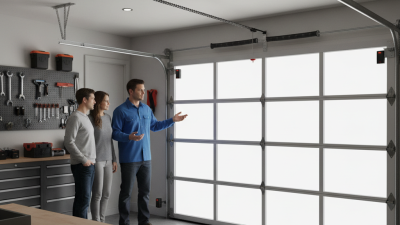
This guide explains the main parts, how they work together, and what to notice during ordinary operation. You’ll see why opener types differ, what happens after you press the remote, and why unusual noises or uneven movement deserve attention. Not every symptom points to the opener itself. That is easy to miss. Knowing the basics helps you describe a problem clearly and decide when a qualified garage-door professional should inspect the system.
What an Overhead Door Opener Is and What It Controls
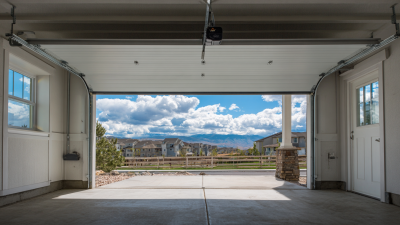
An overhead door opener is the powered unit that moves a garage door along its tracks. It usually includes a motor, a rail, and a trolley connected to the door. When activated, the motor moves the trolley, which pulls or pushes the door. The opener does not carry the door’s full weight alone; springs help balance it. That distinction matters. A door that feels unusually heavy may need professional attention, not a stronger opener.
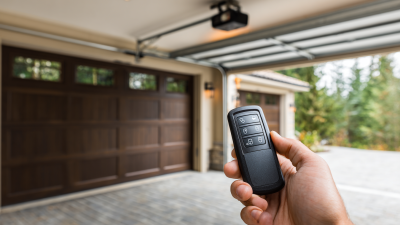
The opener controls movement in response to a wall button, remote, or other compatible control. Many systems also include photo-eye sensors near the floor. If something interrupts the beam while the door is closing, the system should stop or reverse. A light on the opener can illuminate the garage, while some models provide a manual release for use during a power outage. Small details count: a misaligned sensor can prevent normal closing, even when the motor sounds fine.
It controls motion, not every part of the door’s condition. Tracks, rollers, cables, and springs still affect safe operation. Listen for scraping, uneven movement, or sudden changes in speed. Don’t ignore them. I used to think a humming motor meant the opener was working; sometimes it meant the door was stuck. If the door reverses unexpectedly or will not stay open, stop using it and arrange an inspection.
The Main Components of an Overhead Door Opener
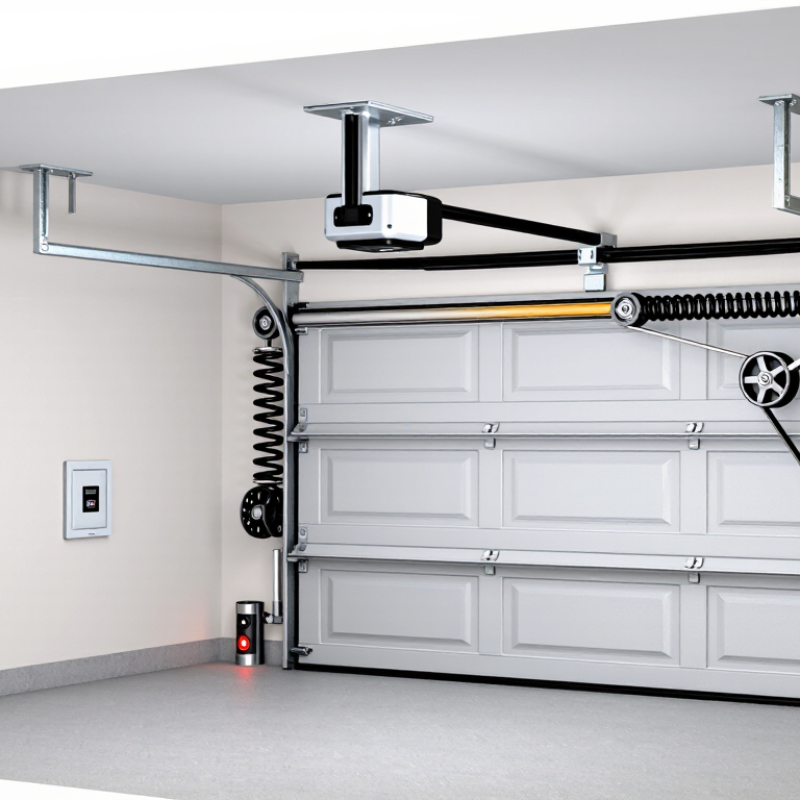
An overhead door opener is a coordinated system, not just a motor. The motor turns a drive mechanism, such as a belt, chain, or screw, which moves a trolley along a metal rail. The trolley connects to the door through an arm. As it travels, the arm pulls the door upward or guides it closed. The door’s springs carry much of its weight; the opener should not be treated as a substitute for balanced springs. Small parts matter.
The control board receives signals from the wall button or remote and manages the motor’s movement. Safety sensors near the floor detect objects in the door’s path and signal the opener to stop or reverse. DASMA’s garage-door safety guidance recommends positioning photo-eye sensors no more than 6 inches above the floor. UL 325 also sets safety requirements for door operators and entrapment protection. Keep the beam clear. A misaligned sensor can leave the door refusing to close, which is frustrating but useful evidence of a safety fault. Check that both sensor lights remain steady, and never bypass the system to force operation. A trained technician can inspect the springs, cables, rail, and opener controls; those components work together, though they do not always wear at the same rate.
What Is an Overhead Door Opener and How Does It Work? - The Main Components of an Overhead Door Opener
| Component |
What It Does |
How It Works |
| Motor and drive unit |
Provides the power that moves the garage door. |
The motor turns a drive mechanism in response to a control signal, moving the trolley along the rail. Motor and drive designs vary by opener model. |
| Drive mechanism |
Transfers the motor’s movement to the trolley. |
Common designs use a chain, reinforced belt, or threaded screw. Each moves the trolley along the rail to open or close the door. |
| Rail and trolley |
Guides and carries the force that moves the door. |
The rail is mounted above the door. The trolley travels along it and connects to the door through an arm. |
| Door arm and brackets |
Connect the opener’s moving trolley to the garage door. |
As the trolley moves, the arm pushes or pulls the door. Brackets secure the rail and arm connection to suitable structural points. |
| Travel-limit system |
Sets the door’s intended fully open and fully closed positions. |
Limit settings tell the opener where to stop its travel. Depending on the design, limits may be adjusted electronically or mechanically. |
| Force-sensing system |
Helps the opener respond if the moving door encounters resistance. |
The opener monitors the effort needed to move the door. If resistance exceeds its operating threshold, the system may stop or reverse the door; it is not a substitute for safety sensors. |
| Photoelectric safety sensors |
Detect an obstruction in the doorway while the door is closing. |
A sensor on each side of the opening creates an invisible beam. If the beam is interrupted, the opener typically prevents closing or reverses the door. |
| Wall control and remote transmitter |
Provide ways to send commands to the opener. |
Pressing a control sends a signal to the opener’s receiver, which activates the motor if operating conditions allow. |
| Manual release |
Allows the door to be disconnected from the opener during a power outage or emergency. |
Pulling the release cord disengages the trolley so the door can be operated by hand, provided the door itself is in safe working condition. |
| Courtesy light |
Illuminates the garage when the opener operates. |
On models equipped with a light, the opener switches it on during operation and turns it off automatically after a set interval. |
Note: Features and component designs vary among overhead door openers. The opener moves the door, while the door’s springs and hardware counterbalance its weight.
How the Opener Converts Power Into Door Movement
An overhead door opener turns electrical power into controlled movement, but it does not lift the entire door by itself. A motor drives a trolley along a rail, usually through a chain, belt, or screw mechanism. The trolley connects to the door’s arm and pulls the door upward, then pushes it closed. The motor supplies motion; springs help balance the door’s weight. This distinction matters.
When the opener starts, its motor rotates a drive gear. That gear moves the chain or belt, carrying the trolley along the rail. As the trolley travels, the attached arm changes the door’s position along its tracks. A balanced door should move smoothly, without the opener straining. Listen closely. Grinding, jerking, or a sudden change in speed can signal a mechanical problem, though sound alone cannot identify its cause.
The opener also uses controls to manage travel and stopping. Limit settings tell it where the door should stop when open or closed. Sensors near the floor detect certain obstructions and can trigger a reversal. They are not a substitute for careful observation. If the door feels unusually heavy when disconnected from the opener, stop using it and have its balance checked by a trained technician. The springs store substantial energy, and adjusting them is not a casual repair.
How Sensors and Controls Guide Safe Operation
What Is an Overhead Door Opener and How Does It Work?
How Sensors and Controls Guide Safe Operation
An overhead door opener uses a motor, track, and controls to move a heavy door. Safety sensors help prevent the closing door from striking a person, pet, or object. Usually, photoelectric sensors sit low on each side of the opening. They send an invisible beam across the doorway. If something interrupts it, the control system should stop or reverse the door. A small interruption matters. The opener also monitors travel limits and resistance, but these features cannot detect every hazard.
UL 325, the safety standard for door operators, calls for entrapment-protection systems. The U.S. Consumer Product Safety Commission’s garage door safety guidance recommends testing reversal with a 1.5-inch-high object, such as a board laid flat beneath the door. If the door does not reverse, stop using the opener until it has been inspected. Check the sensors, too: dust on a lens, a loose bracket, or direct sunlight can interfere with the beam. A lit indicator is reassuring, but it is not proof that the door will reverse correctly. Test the system regularly, and keep children away from moving parts.