Choosing a single garage door is not simply a matter of matching color with brickwork. The right choice affects daily access, weather protection, security, maintenance, and resale appeal. This guide compares ten practical types, including sectional, roller, side-hinged, sliding, tilt-up, and glass-panel designs. Each option behaves differently when space is tight, winters are harsh, or the driveway slopes toward the garage.
Market evidence shows why this decision deserves careful attention. Zonda’s 2024 Cost vs. Value Report ranked garage door replacement among the strongest exterior remodeling investments, with an average cost recouped above 190 percent in its surveyed markets. That figure is impressive, but it is not a promise for every home. Local labor prices, door quality, installation accuracy, and neighborhood expectations can change the result. It depends.
Technical guidance from the Door and Access Systems Manufacturers Association, or DASMA, emphasizes correct sizing, safe operation, and appropriate wind-load performance. The U.S. Department of Energy also identifies garage doors as part of a home’s broader air-sealing and insulation strategy. A poorly fitted door may leave visible daylight beneath the bottom seal. You may also feel cold air near the interior wall.
This review weighs real-world details rather than relying on appearance alone. We consider headroom, side clearance, opening speed, insulation, noise, repair needs, and long-term value. Some rankings remain debatable. A quiet roller door may suit a compact urban garage, while an insulated sectional door may perform better in a cold climate. The best single garage door is the one that fits your building, habits, climate, and budget.
A single garage door closes one vehicle-sized opening with one moving door leaf. Typical residential widths range from 8 to 10 feet, although older homes may differ. The door transfers its weight through hinges, rollers, tracks, and counterbalance springs. An electric opener only guides the movement; it should not carry a poorly balanced door. Sectional doors bend at hinged panels, while tilt-up doors swing outward before rising. Roller doors coil above the opening, and side-hinged doors open like large entrance doors.
Industry reports show why this category matters. Grand View Research valued the global garage door market at about USD 3.5 billion in 2023 and projected continued growth through 2030. The U.S. Department of Energy also identifies the garage as a possible weak point in a home’s thermal envelope, especially when it shares walls with living areas. Insulation, perimeter seals, and correct installation therefore affect more than appearance. In practice, a lightweight door may operate smoothly, but heavier insulated panels usually demand stronger springs and careful adjustment. This is where many online comparisons oversimplify the choice.
Tips: Measure the opening, headroom, side clearance, and backroom before selecting a type. Test the manual balance with the opener disconnected. The door should stay near waist height without dropping quickly. Listen for scraping, sudden movement, or uneven gaps. Those signs need professional attention. I would not treat spring replacement as a casual repair; stored tension can cause serious injury. Check the International Door Association’s maintenance guidance and the opener manufacturer’s safety instructions, then schedule a qualified inspection when the door feels unpredictable.
A single garage door serves one vehicle-sized opening, commonly about 8–10 feet wide. Its operation is defined by how the door moves: vertically, upward and inward, sideways, or outward on hinges. The chart compares the typical exterior clearance needed in front of the garage during operation. Lower clearance is generally better when driveway space is limited.
Values are typical planning allowances in inches. A value of 0 means the door normally does not swing across the driveway; it does not mean that no internal ceiling, side-wall, or tracking space is required. Actual clearance depends on the door dimensions, hardware, installation method, and local building conditions. In general, sectional, roll-up, retractable, sliding, vertical-lift, and high-lift designs are space-efficient, while side-hinged and tilt-up canopy doors require more room outside the opening.
Top 10 Single Garage Door Types Explained
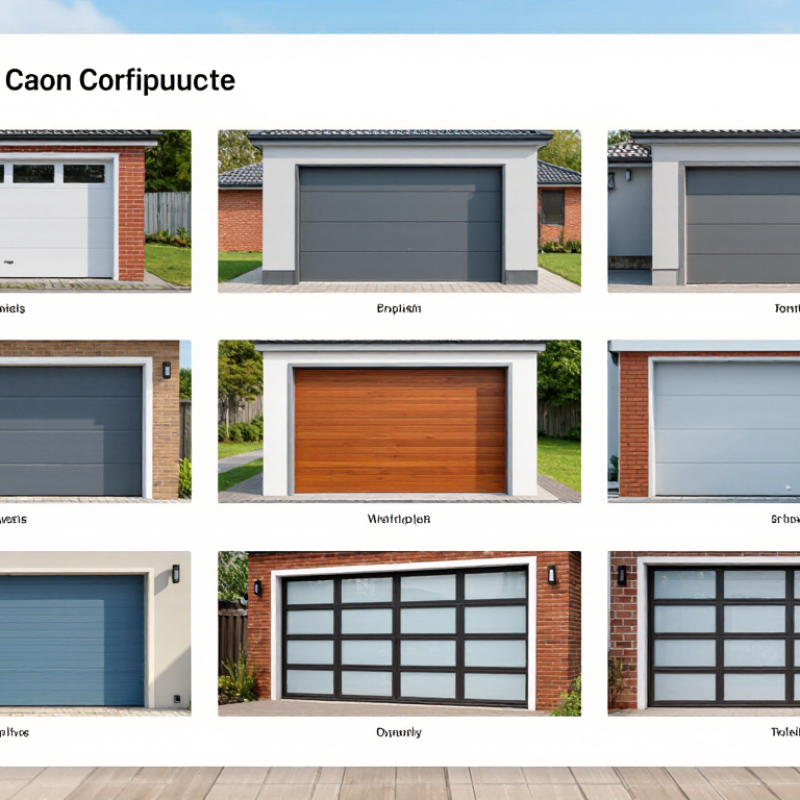
A single garage door can use less wall space, but its design affects security, insulation, noise, and daily comfort. The ten common types include single-layer steel sectional, insulated steel sectional, aluminum-and-glass full-view, solid wood, carriage-house, roll-up, tilt-up canopy, tilt-up retractable, side-hinged, and sliding or folding doors. Sectional doors suit most homes because their panels travel vertically, leaving the driveway clear. Roll-up doors work well in compact garages, although their curtain can feel more industrial. Side-hinged doors open like cabinets. They need exterior clearance.
Material changes performance. The U.S. Department of Energy notes that insulation helps reduce heat transfer through building components, especially where conditioned spaces adjoin garages. An insulated sectional door usually offers better temperature stability than a single-layer steel door. However, insulation alone cannot fix air leakage around worn seals. That detail is often overlooked.
The 2024 Cost vs. Value Report from Zonda reported a 194.0% cost recoup for garage door replacement, based on its national remodeling sample. This figure is a market benchmark, not a promise for every single-car garage. The report also reflects appearance and resale appeal. Full-view aluminum doors create strong daylight, but glass increases weight and cleaning demands. Wood doors provide texture, yet they require more maintenance in wet climates. My practical preference is an insulated sectional door for balanced use, though that choice can be wrong for a narrow garage or a heritage-style façade. Measure headroom, side clearance, opening width, and local weather exposure before comparing prices.
Choosing the best single garage door starts with the material, not the color. Steel offers strong security, stable performance, and many surface finishes. Aluminum weighs less and resists rust, but it can dent more easily. Wood creates warmth and character, although it needs regular sealing. Fiberglass can imitate wood with less upkeep, yet repairs may be difficult after severe impact.
Insulation deserves close attention. A well-insulated door can reduce temperature changes inside the garage and soften outside noise. Check the insulation rating, panel thickness, seals, and frame construction together. A high rating means little if air leaks around the edges. In cold or windy areas, bottom seals often show wear first. That detail matters.
Garage door styles also change daily convenience. Sectional doors suit many driveways and open vertically. Roller doors save ceiling space but may offer fewer design choices. Tilt-up doors need clear space outside, while side-hinged doors provide a traditional entrance. Windows add daylight, but they can reduce privacy and increase heat gain. Looks matter.
Compare spring systems, track quality, manual release access, and opener compatibility. Ask how replacement parts are sourced locally. I once saw a carefully chosen door perform poorly because its tracks were installed slightly out of alignment. Installation quality can outweigh a small material upgrade. Measure twice. A cheaper door may cost more after repeated repainting, seal replacement, or repairs. Your climate, garage use, budget, and maintenance tolerance should guide the decision.
Choosing the best single garage door depends on the home, driveway, climate, and daily routine. A sectional door suits attached garages with limited driveway space. Its vertical movement keeps vehicles close to the entrance. Insulated panels can reduce heat transfer and outside noise. This matters when a garage shares a wall with living areas.
A roll-up door works well where ceiling space is restricted. It opens compactly above the entrance. However, it may provide less insulation than a well-sealed sectional design. A tilt-up canopy door offers a simple appearance and fewer moving parts. It needs clear space outside, so it may not suit short driveways. Side-hinged doors fit traditional homes and allow quick pedestrian access. They need room to swing outward. Measure twice.
For modern houses, a full-view door can add glass and aluminum lines, but privacy and heat gain require careful planning. A carriage-style door creates a classic look without demanding a swing-out operation. Sliding doors may help unusual layouts, although wall space must remain available beside the opening. In coastal or wet regions, corrosion-resistant hardware deserves close attention. In cold areas, weather seals and insulated construction become stronger priorities. Security also depends on the frame, locking system, lighting, and installation quality, not only the door panel. Quiet matters. A common mistake is choosing a style before checking headroom, side clearance, and opener compatibility. The most attractive option can become inconvenient when daily parking is tight.
| Door Type | How It Operates | Best for | Space Needed Inside Garage | Typical Material Options | Main Advantages | Important Limitations | Overall Suitability |
|---|---|---|---|---|---|---|---|
| Sectional Overhead Door | Several hinged panels roll vertically and rest horizontally beneath the ceiling. | Most modern single-car garages and homeowners seeking an all-purpose option. | Requires ceiling tracks and clear space above the vehicle; exact clearance depends on the track system. | Galvanized steel, aluminum, fiberglass, or insulated composite panels. | Good insulation potential, smooth operation, strong security, and broad design flexibility. | Ceiling tracks can interfere with overhead storage, lights, or low beams. | Best overall choice |
| Roll-Up Garage Door | Curtain-style slats coil into a housing above the opening. | Garages with limited ceiling depth or spaces that need maximum overhead clearance. | Needs headroom for the roll housing, but usually leaves more usable ceiling space behind it. | Steel or aluminum slats; insulated versions are available. | Compact overhead footprint, durable construction, and suitability for demanding use. | Often provides less residential styling and insulation than a well-insulated sectional door. | Best for limited ceiling space |
| Up-and-Over Canopy Door | One rigid panel tilts upward and extends slightly outside the garage when open. | Traditional homes with a clear driveway and sufficient front clearance. | Needs overhead frame space and clear area in front of the garage during opening. | Steel, timber, aluminum, or fiberglass. | Simple appearance, relatively straightforward mechanism, and often lower installation complexity. | The moving panel may swing outward, making it unsuitable for short driveways or tight parking. | Best for traditional layouts |
| Up-and-Over Retractable Door | A single panel lifts fully into the garage on horizontal side-mounted tracks. | Homeowners wanting a single-panel door with smoother, more controlled movement. | Needs ceiling track space and a clear internal area for the panel when open. | Steel, timber, aluminum, or fiberglass. | Generally does not project as far beyond the opening during operation as a canopy design. | The large rigid panel can be heavier and less thermally flexible than sectional panels. | Best for single-panel preference |
| Side-Hinged Garage Door | Two leaves, or one hinged leaf, swing outward like traditional doors. | Garages used as workshops, storage rooms, or pedestrian-access spaces. | Uses little or no ceiling track space, but requires a clear swing area outside. | Timber, steel, aluminum, or composite materials. | Easy pedestrian access, classic appearance, and minimal overhead hardware. | Requires driveway clearance and may be less convenient for frequent vehicle entry. | Best for workshop access |
| Side-Sliding Garage Door | Door panels slide horizontally along a track beside the garage wall. | Garages with limited headroom or ceilings occupied by storage and equipment. | Needs unobstructed wall space equal to, or close to, the door travel distance. | Steel, aluminum, timber, or composite panels. | Preserves most ceiling space and can allow partial opening for people or pets. | Wall-mounted storage, shelving, or windows may restrict the sliding path. | Best for low headroom |
| Bi-Fold Garage Door | Two connected sections fold upward or inward during opening. | Contemporary homes and garages requiring fast opening with limited overhead travel. | Usually needs less deep ceiling storage space than a conventional sectional system, depending on design. | Aluminum, steel, timber, or composite materials. | Distinctive appearance, rapid operation potential, and good use of restricted overhead space. | More hinges and moving parts can increase maintenance requirements and installation cost. | Best for contemporary homes |
| Full-View Glass Garage Door | Typically operates as a sectional or overhead door with framed glass panels. | Modern homes, studios, showrooms, and garages that benefit from natural light. | Usually needs standard overhead tracks; clearance depends on the chosen operating system. | Aluminum frames with tempered or laminated glass panels. | Strong visual appeal, daylight access, and the ability to use a garage as a multipurpose room. | Less privacy and potentially lower insulation than solid insulated panels; glass adds weight. | Best for light and design |
| Insulated Garage Door | Usually a sectional or roll-up door built with a foam-insulated core and sealed layers. | Attached garages, rooms above garages, and homes in hot, cold, or noisy locations. | Clearance is determined by the underlying operating style; insulation increases panel thickness and weight. | Steel or aluminum skins with polyurethane or polystyrene insulation. | Improves thermal stability, reduces outside noise, and can make the door feel more solid. | Costs more initially and may require properly sized springs and a compatible opener. | Best for energy efficiency |
| Automatic Garage Door | An electric opener moves a compatible door using a motor, drive system, and safety sensors. | Daily vehicle use, poor weather conditions, accessibility needs, and convenience-focused homes. | Requires opener headroom, power access, and clear sensor alignment; the exact requirement varies by opener type. | The door itself may be steel, aluminum, timber, fiberglass, or composite. | Convenient operation, remote control potential, and reduced need to leave the vehicle. | Needs electricity, periodic maintenance, and a manual-release method for power failures. | Best for convenience |
Choosing a single garage door starts with the opening, not the catalog. Sectional doors suit most homes, while roll-up, side-hinged, tilt-up, sliding, and full-view designs serve different spaces. Measure width, height, ceiling clearance, and side room twice. A compact garage may favor a roll-up door, but its barrel can reduce overhead storage. Full-view panels look modern, yet they often require more cleaning. No choice is perfect.
Insulation matters when the garage shares a wall with living space. However, a higher R-value is not automatically better. Check the panel construction, weather seals, window quality, and local climate together.
Zonda’s 2023 Cost vs. Value Report recorded a 102.7% cost recoup for garage door replacement, showing that installation quality can influence perceived home value. The figure is regional, though, so it should not promise a guaranteed return.
Installation needs careful alignment and correct spring sizing. A door that shakes, drags, or drops quickly needs professional inspection. Never adjust torsion springs casually. DASMA guidance supports routine safety checks, and the U.S. Consumer Product Safety Commission recommends testing the opener monthly with a 2-by-4 board. The door should reverse after contact. Lubricate hinges and rollers lightly, inspect cables for fraying, and clear the photo-eye sensors. Small oversights become expensive.