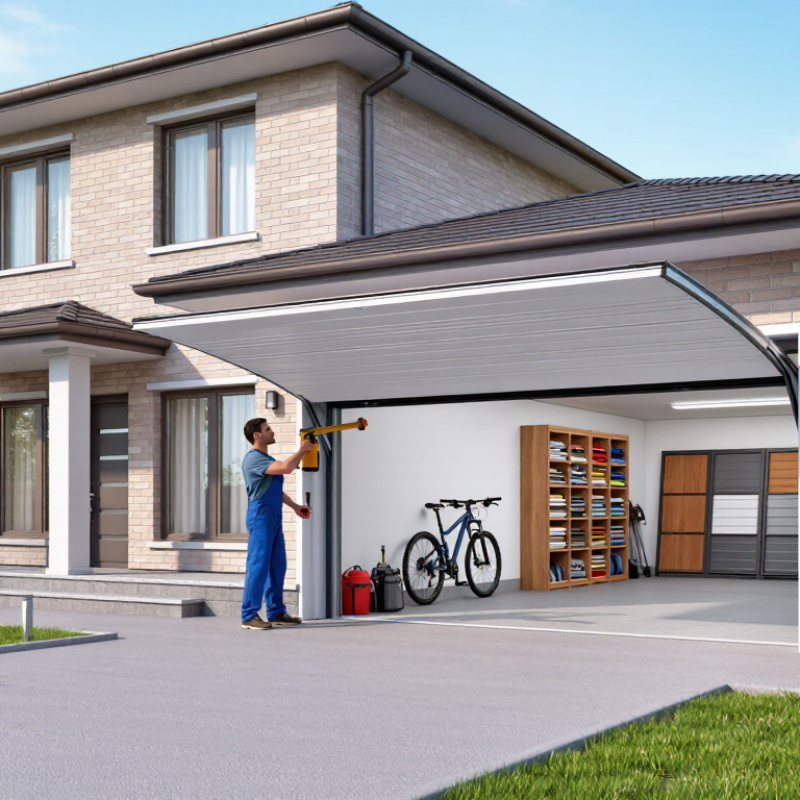
Choosing an overhead garage door starts with the opening, not the showroom display. Measure the width, height, and headroom, then note where tracks and the opener must fit. A door that looks perfect online can scrape a low ceiling or crowd a side wall. Small details matter.
“Choose the door for the house, the climate, and the way you use the garage,” says fictional garage-door specialist Elena Ruiz. Her rule is practical: match construction and insulation to daily needs, not just appearance. Steel doors are durable and come in many finishes; wood offers warmth but needs more upkeep. Insulated models can make a noticeable difference when the garage shares a wall with living space. Check wind-load ratings for your location, too, and confirm that the opener is compatible with the door’s weight and design.
Safety deserves a close look. Ask about pinch-resistant panels, properly fitted photoelectric sensors, and a balanced spring system. Never treat a heavy door as a casual repair project. Ask a qualified installer to assess it. Get written details on materials, installation, and warranty coverage. Compare the full cost, not only the advertised price. A low quote may leave out removal, hardware, or finish options. And measurements can still be wrong. That is worth admitting. This guide explains how to compare styles, materials, insulation, safety features, costs, and installation needs before choosing an overhead garage door.
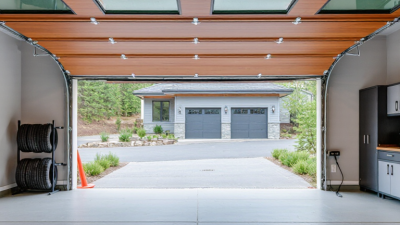
Identify your garage’s layout before choosing an overhead door. Measure the clear opening’s width and height, then check headroom above it, side room beside it, and backroom along the ceiling. Include tracks, lights, pipes, and storage racks in those measurements. A tape measure can miss a ceiling obstruction. Measure twice.
The Door & Access Systems Manufacturers Association (DASMA) advises checking the opening and surrounding space when selecting a door system. The required track clearance varies by door and hardware, so treat a measurement from another garage as a starting point, not a specification. Note whether the floor slopes, whether the ceiling is low, and whether a car’s roof or a raised storage platform could meet the door as it travels. These details can influence track configuration and door operation.
Then match the door to how the garage is used. If it shares a wall with living space, compare insulated options and their stated thermal ratings; don’t assume insulation alone fixes drafts. The 2024 Cost vs. Value report estimated a 194% cost recoup for garage-door replacement nationally, but that figure does not establish fit or local resale value. Your layout comes first. A quick sketch helps, though I sometimes forget to mark the opener outlet—an easy detail to overlook.
An overhead door changes how a garage works, not just how it looks. Sectional doors lift along ceiling tracks and suit many homes with limited driveway space. Roll-up doors coil above the opening, but need suitable headroom. Tilt-up doors swing outward, so check for cars, paths, and snowbanks nearby. Check the opening first.
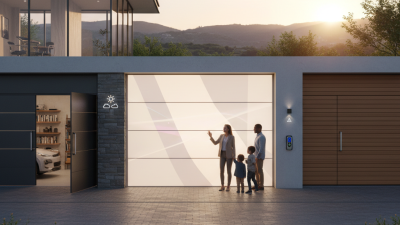
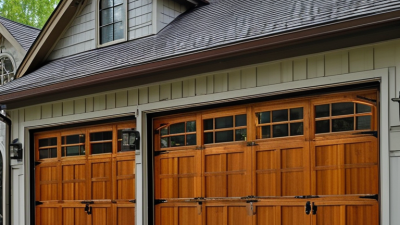
Steel is practical and low-maintenance, while wood offers warmth but needs regular care. Aluminum-and-glass designs bring daylight inside, though their insulation can vary. For attached garages or cold climates, compare insulation ratings and weather seals. Windows near the top can brighten a workbench without sacrificing as much privacy. Small details matter.
The 2024 Cost vs. Value report from Zonda estimated a 194.5% cost recoup for garage door replacement, based on national averages. That figure is not a resale guarantee; local prices, door specifications, and installation costs differ. I might overlook track clearance when comparing attractive designs, yet a door that binds is a daily frustration. Measure the opening, ceiling height, and side clearance, then ask an installer to confirm the fit and operating requirements.
Compare common residential opening widths before choosing a door type, material, and design.
Single-car openings are commonly 8–9 feet wide, while double-car openings are commonly 16–18 feet wide. These are typical examples, not fixed standards; measure your opening before ordering. Sectional doors use ceiling tracks, while roll-up doors coil above the opening. Consider available space, insulation needs, upkeep, and your home’s exterior when selecting construction and finish.
How to Choose an Overhead Garage Door?
Choose the Right Size, Insulation, and Weather Resistance
Start with the opening, not the old door’s measurements. Measure width and height at several points, since floors and frames can be uneven. Measure twice. Check the space above the opening and beside it; tracks and springs need room to operate safely. If measurements differ, use the tightest clearance and ask a qualified installer to confirm the fit.
Insulation matters most when the garage shares a wall with your home or serves as a workshop. Compare doors using their stated R-values, but remember that seams and installation affect real-world performance. A well-fitted insulated door can reduce drafts and temperature swings. It will not turn an unheated garage into a warm room. I once underestimated the effect of a small gap beneath a door; cold air found it every time.
For weather resistance, inspect the bottom seal, side seals, and joints between panels. A flexible bottom seal should meet the floor evenly, including near the corners. In rainy or windy areas, look for durable, corrosion-resistant hardware and materials suited to local conditions. No seal stays perfect forever. Check it each season for cracks, flattening, or daylight, and replace worn parts before water reaches stored tools or boxes.
Compare how the door opens before choosing a model. A sectional door usually needs clear ceiling space, while a wall-mounted system can suit some garages with limited overhead room. Belt-driven openers tend to run more quietly than chain-driven ones, which can matter when a bedroom sits above the garage. Quiet matters. Check whether the opener includes a manual release and backup power if outages are common in your area. A smooth-looking door is not automatically a safe one.
Look for photo-eye sensors near the floor and an automatic reverse function. Test the sensors according to the manual; the door should stop or reverse when the beam is interrupted. Keep hands clear. Inspect cables, rollers, hinges, and tracks for fraying, wobble, or debris. Listen for new grinding or uneven movement, too. Lubricate only the parts and with the products specified by the manufacturer; excess lubricant can attract grit. I would not adjust springs or lift cables myself. They hold substantial tension, and a small mistake can cause injury. A yearly professional inspection is sensible, though I used to think it was unnecessary until minor noise became a larger repair. Don’t wait for a door to stick halfway before checking it.
| Decision Area | Option or Feature | What to Know | Selection or Care Tip |
|---|---|---|---|
| Opening and Counterbalance Systems | |||
| Door spring system | Torsion springs | Mounted on a shaft above the door opening, torsion springs counterbalance the door as it moves. Correct sizing depends on the door’s weight and dimensions. | Have a qualified door technician select and service the springs. Springs are under high tension and can cause serious injury if handled incorrectly. |
| Door spring system | Extension springs | Installed along the horizontal tracks, extension springs stretch and contract as the door operates. Properly installed systems use safety cables to help contain a broken spring. | Check that safety cables are present where required by the system design, and arrange professional service if a spring is damaged or the door becomes difficult to lift. |
| Automatic opener drive | Belt drive | A reinforced belt moves the trolley. Belt-drive openers are generally quieter than chain-drive models, which can be useful near living spaces. | Consider this type when reducing operating noise is important. Confirm that the opener is compatible with the door’s weight and configuration. |
| Automatic opener drive | Chain drive | A metal chain moves the trolley. Chain-drive openers are widely used, but their operation is usually more audible than that of belt drives. | A practical option where some operating noise is acceptable. Follow the manufacturer’s instructions for inspection and any chain adjustment. |
| Automatic opener drive | Screw drive | A threaded steel rod moves the trolley. Design and maintenance needs vary by model and manufacturer. | Check the product instructions for lubrication and climate-related operating guidance before choosing or servicing this type. |
| Manual operation | Manual lift | A correctly balanced overhead door can be lifted by hand. Manual operation does not provide the convenience or automatic safety functions of a powered opener. | If the door feels unusually heavy, uneven, or difficult to lift, stop using it and arrange an inspection rather than forcing it. |
| Door construction | Insulated or non-insulated sections | Insulation can reduce heat transfer through the door. Its value depends on the garage’s connection to the home, local climate, and how the space is used. | Compare the door’s stated insulation performance and construction, and consider whether the garage is heated, cooled, or attached to living areas. |
| Safety Features and Checks | |||
| Automatic opener protection | Photoelectric safety sensors | These sensors are typically installed near the floor on either side of the opening. An interrupted beam should prevent or reverse a closing door, depending on the opener’s operation. | Keep the sensor lenses clean and aligned. Test the opener according to its manual; never bypass or obstruct the sensors. |
| Automatic opener protection | Automatic reversal | Modern residential openers commonly include force-based reversal protection. Requirements and test procedures can vary by jurisdiction and opener model. | Follow the opener manufacturer’s test instructions and applicable local requirements. If the door does not reverse as specified, stop using the opener and request service. |
| Door design | Pinch-resistant panel edges | Some door designs use panel profiles intended to reduce the risk of fingers becoming trapped between sections as the door moves. | Ask whether the selected door includes this design feature, especially where children may be near the door. |
| Safe operation | Clear opening and visible door movement | People, pets, and objects should remain clear of the door’s path. A moving door should not be treated as a barrier or left unattended when safety is uncertain. | Keep the opening area clear and teach household members not to walk or play beneath a moving door. |
| Emergency access | Manual release | Many automatic openers have a release that disconnects the door from the trolley so the door can be operated manually during a power outage. | Learn how the release works and follow the product instructions. Use it only when the door is closed if possible; a door with a broken spring may fall. |
| Routine Maintenance and Inspection | |||
| Monthly visual check | Panels, tracks, cables, rollers, and springs | Look for visible damage, frayed cables, loose hardware, bent tracks, unusual gaps, or a door that sits unevenly. Do not touch springs or cables. | Stop operating a door with damaged or loose components and contact a qualified technician for assessment. |
| Periodic operation check | Balance and movement | A door that moves unevenly, binds, or makes new grinding or banging sounds may need adjustment or repair. Opener settings should not be used to compensate for a poorly balanced door. | Have a professional check the door and counterbalance system if movement changes or the door will not remain in its expected position. |
| As directed by the manual | Rollers, hinges, and other moving parts | Some components may require appropriate lubrication; others may be designed to operate without it. Lubricant type and application points vary by system. | Use only the lubricant and maintenance steps specified by the door and opener manufacturers. Avoid applying lubricant to tracks unless instructed. |
| Seasonal or periodic check | Weather seal and bottom seal | Seals help limit drafts, water, dust, and pests entering around the door. They can harden, crack, or wear over time. | Inspect for visible gaps or damage and replace worn seals with compatible parts. |
| Professional service | Springs, cables, tracks, and opener adjustments | These components may carry substantial load or require specialized tools and setup. Incorrect adjustment can make a door unsafe. | Leave spring, cable, and major track repairs to a qualified garage-door professional; do not attempt to loosen or remove spring hardware. |
| Choosing an installer | Correct fit, installation, and documentation | Door size, weight, headroom, side room, ceiling clearance, and opener compatibility affect installation. Local building requirements may also apply. | Confirm measurements, required clearances, safety features, warranty terms, and maintenance instructions before purchase and installation. |
How to Choose an Overhead Garage Door?
Compare the full installed price, not just the door’s sticker cost. Remodeling’s 2024 Cost vs. Value report puts a standard garage-door replacement at an average of $4,513, with an estimated $8,751 in resale value. That is a national benchmark, not a quote or guaranteed return. Local labor, opening size, insulation, and disposal fees can shift the total.
Read warranty terms closely. Check whether they cover door sections, hardware, finish, and labor for different periods. Ask what could void coverage, such as poor maintenance or installation. Compare professional installation with any supplier-approved alternative, and get removal, disposal, weather seals, and opener compatibility listed in writing. A low bid may leave out the old door haul-away. Easy to miss.
Tips: Request itemized quotes from at least two installers, using the same door specifications. Ask who handles service calls and whether labor is covered. Take a photo of the existing tracks and ceiling clearance before the site visit; it helps surface fit issues early. I’d still leave room for a small contingency, because older openings rarely tell the whole story.