Top 10 Overhead Door Opener Manufacturers in China
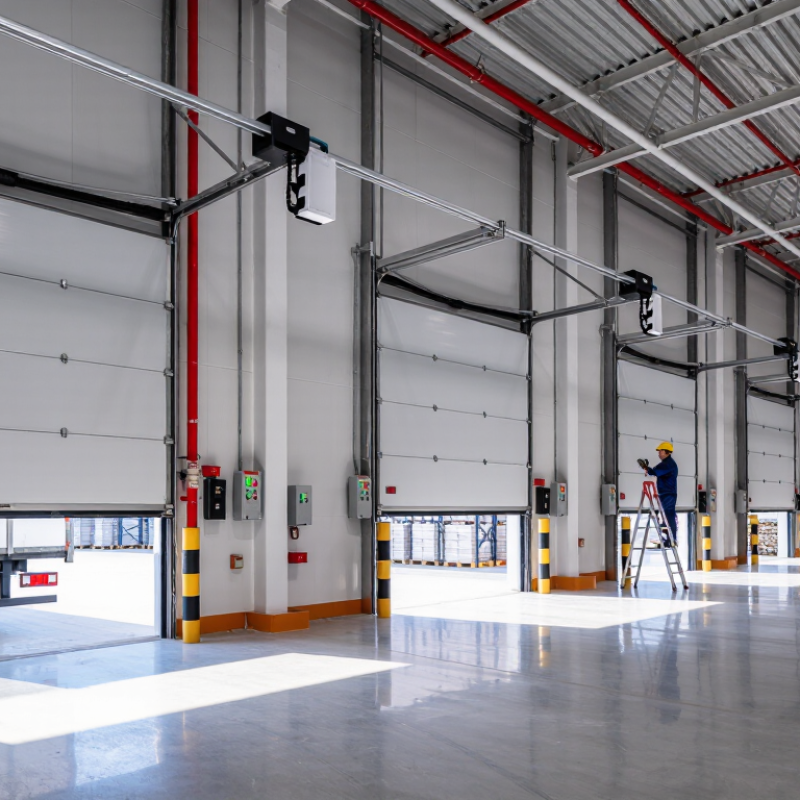
Choosing an overhead door opener is not just a matter of matching motor power to door size. For warehouses, workshops, and commercial garages, the right system must suit the door’s weight, opening frequency, available power, and operating environment. A unit that works well on a quiet residential garage may struggle with a heavy sectional door that cycles throughout the day. Details matter.
This guide introduces ten overhead door opener manufacturers in China and outlines practical points buyers can compare. These include product range, drive design, rated duty cycle, control options, safety features, customization, and after-sales support. Look closely at the specifications: lifting capacity, opening speed, noise level, and compatibility with safety sensors can affect daily operation. Ask suppliers for current product documents and clear answers about testing, warranty coverage, spare parts, and technical assistance. A polished catalogue is useful, but it is not enough.
The companies featured may serve different markets and project types, so the order should not be treated as a universal ranking. A manufacturer suited to a small garage installation may not meet the needs of a busy loading bay. Samples, references, and direct technical discussions can reveal gaps that a product page cannot. Not every fit. Buyers should also confirm relevant certifications for their destination market and installation requirements. This overview offers a starting point, not a substitute for checking specifications and service commitments. Supplier claims deserve careful review; even a strong shortlist can miss an important detail.
Types and Key Components of Overhead Door Openers
Overhead door openers use different drive systems to move a door along its tracks.
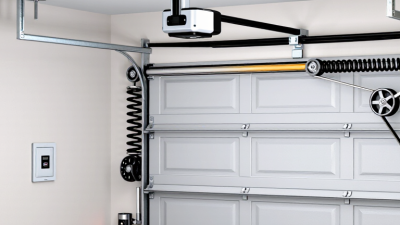
Chain-drive models pull a trolley with a metal chain and suit many heavier doors, though they can sound rough in a quiet garage. Belt-drive units use a reinforced belt for smoother, quieter travel. Screw-drive designs move a trolley along a threaded rod, while jackshaft units mount beside the door and turn the torsion shaft.
Quiet matters.
Door weight, balance, ceiling clearance, and daily cycle count should guide selection.
A typical opener includes a motor, drive mechanism, rail or shaft coupling, trolley, control board, travel-limit settings, and safety sensors. Photoelectric sensors sit near the floor; their beam should remain clear as the door closes. Force sensing and a manual release add further control. These details are easy to overlook. Grand View Research’s 2024 Garage Door Market report estimates the global garage door market at USD 6.05 billion in 2023, with projected growth through 2030. That figure covers doors, not opener mechanisms alone, so it is useful market context rather than a direct measure of opener demand. In practice, installation quality and a properly balanced door matter as much as the opener’s listed lifting capacity.
Criteria for Assessing Chinese Opener Manufacturers
When assessing Chinese opener manufacturers, inspect the production process, not just the showroom sample. Ask how each motor batch is identified and how failed units are traced. The International Federation of Robotics’ World Robotics 2024 report records 276,288 industrial robots installed in China during 2023. That was 51% of global installations. This signals strong automation capacity, but does not prove that a specific opener is reliable. Useful distinction.
Request test records for lifting force, repeated operating cycles, thermal rise, noise, and obstacle reversal. A useful factory visit includes watching a loaded door run repeatedly, then checking the test log against the unit’s serial number. Review safety documentation against the applicable market requirements, including IEC 60335-2-95 where relevant. Compare rated duty cycles and standby power using the same test conditions; otherwise, the figures may mislead. Ask for component traceability and written change-control procedures, too. A polished audit can still miss weak supplier oversight. I would treat that as a real risk, not a paperwork detail.
Profiles of 10 Leading Overhead Door Opener Manufacturers in China
Profiles of 10 Leading Overhead Door Opener Manufacturers in China
China’s overhead door opener sector includes manufacturers with different strengths, from compact residential systems to heavy-duty industrial drives. These ten profiles highlight useful areas to compare; they are not a verified ranking. One maker may integrate motors, rails, and controls. Another focuses on quiet operation for garages beside living spaces. A third builds higher-torque units for wider doors. A fourth offers compact designs for low headroom. A fifth specializes in remote-control options. A sixth emphasizes corrosion-resistant finishes for humid sites. A seventh supplies components for custom door projects. An eighth develops control boards with adjustable travel limits. A ninth serves distributors with varied voltage configurations. A tenth focuses on straightforward installation and replacement parts. Details vary.
Tips: Ask for the rated door weight, duty cycle, noise data, and operating temperature range. Request installation instructions and confirm that the opener matches the door’s balance and dimensions. Test a sample if possible. Catalog figures alone can be incomplete. A small mismatch in rail length or door balance can cause real trouble.
Horsepower-to-watt equivalents for common motor rating values. These are unit conversions (1 mechanical horsepower = 745.7 watts), not measured performance data or comparisons between manufacturers.
Product Ranges, Certifications, and Export Capabilities
When comparing the top 10 overhead door opener manufacturers in China, look beyond product photos. Their ranges may include chain, belt, or screw-drive openers, plus motors, remotes, safety sensors, and controls. Check whether each model suits the door’s weight, travel, and daily cycle count. A quiet belt drive may suit a home garage, while a busier site may need a different duty rating. Ask for technical sheets, load limits, and installation instructions.
Certifications matter, but verify the certificate number, issuing body, product model, and validity period. A document for one motor may not cover every opener in a supplier’s catalogue. For export capability, ask about destination-specific voltage, manuals, protective packaging, spare parts, and shipping lead times. Request a sample order or inspection plan when practical. A polished catalogue is useful, but it cannot show how clearly a supplier handles a delayed shipment or a replacement part request. That gap deserves attention.
Tips: Ask for proof. Compare model-specific certificates, not general claims. Confirm the control frequency and available safety features before ordering. Request photos of packed goods and labels. One overlooked detail is the local availability of compatible parts; it can turn a low purchase price into a slow repair. No checklist is perfect, so record unanswered questions before choosing a supplier.
How to Select a Manufacturer for Your Project
Selecting an overhead door opener manufacturer starts with the door, not the catalog. Record its width, height, weight, track arrangement, and daily opening cycles. A unit designed for a light residential door may struggle with a heavy commercial panel. Ask the supplier to confirm motor capacity, duty cycle, and compatible controls in writing. Small details matter.
Examine production and verification practices. Request drawings, installation instructions, and test records for overload protection, travel limits, and safety reversal. If the opener will face dust, cold, or frequent use, ask how those conditions are tested. A polished sample is useful, but it cannot show consistency across a full production batch. Ask for a pre-shipment inspection plan and clear criteria for rejecting defects.
Serviceability deserves equal attention. Check whether replacement gears, circuit boards, remotes, and sensors will remain available, and confirm realistic lead times. Discuss warranty exclusions before ordering, not after a motor fails. Compare response times by sending each candidate the same technical question. The answer should be specific, not merely reassuring. I still find this easy to overlook: a low unit cost can hide slow spare-parts support. If possible, order a pilot unit and test installation with your actual door and wiring. Leave room for revision; site conditions can change the specifications.