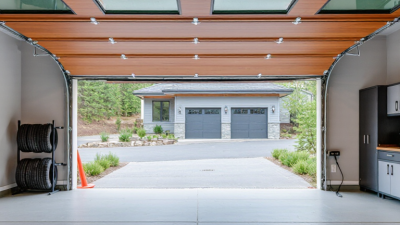
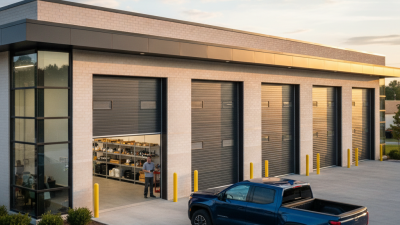
A commercial door affects more than the building’s appearance. It shapes deliveries, staff movement, security, and daily operating costs. The right over head door can open smoothly for a loading bay, seal against wind, and reduce delays during busy shifts. The wrong choice can create problems that are easy to overlook during installation planning.
For this draft, fictional commercial-door specialist Daniel Mercer offers a practical perspective: “A door is part of the workflow; choose it for the way your team actually works.” This is an illustrative quotation, not a verified statement from a real expert. In practice, businesses should compare opening size, cycle frequency, insulation, operating speed, and maintenance access. A warehouse with forklifts may need a different setup than a small retail stockroom. Details matter.
Look closely at the space. Is the floor exposed to rain? Do vehicles queue near the entrance? Could a slow or noisy door disrupt nearby work? These questions help narrow the options before price alone takes over. Still, no door solves every problem. Site measurements, local conditions, and qualified installation advice should guide the final choice. A careful decision starts with the daily routine—and leaves room to reconsider assumptions.

An overhead door is a large door that opens upward, rather than swinging into a busy loading area. A sectional model uses hinged panels that travel on rollers along metal tracks. As it rises, the panels curve above the opening and rest near the ceiling. A counterbalance spring helps offset the door’s weight; an electric operator moves it, while photo-eye sensors can stop or reverse closing when something blocks the path. The system is practical, but it is not maintenance-free.
The U.S. Department of Energy’s 2018 Commercial Buildings Energy Consumption Survey estimates that the United States has 5.9 million commercial buildings, with 96 billion square feet of floor space. That scale makes reliable service and loading access important across many types of workplaces. A well-fitted door can also help limit drafts when closed, though the actual result depends on its seals, condition, and how often it opens. Even a small gap can be easy to overlook.
Tips: Keep tracks clear of boxes and grit. Watch the door during a full cycle; scraping, uneven movement, or a sudden change in sound may signal a problem. Never put a hand beneath a moving door. Check the operator’s safety features regularly, and have worn springs or cables inspected by a trained technician. DOE data source: 2018 Commercial Buildings Energy Consumption Survey.
| Why Choose an Overhead Door for Your Business? — What an Overhead Door Is and How It Operates | ||
|---|---|---|
| Dimension | How It Works or What It Means | Business Relevance |
| Basic definition | An overhead door is a large door that opens upward and rests above the opening when fully open. Many commercial models are sectional, with hinged panels that travel along tracks. | It provides a practical way to secure vehicle bays, loading areas, workshops, and storage spaces. |
| Door sections | On a sectional model, connected panels bend at their joints as the door moves from vertical tracks into horizontal tracks near the ceiling. | The door can open without swinging outward, which can help preserve space in front of the building. |
| Tracks and rollers | Tracks guide the door, while rollers attached to the panels move within them. Track layout and clearance depend on the building and door configuration. | Correct measurement and installation help the door travel smoothly and avoid conflicts with ceilings, lights, or equipment. |
| Counterbalance system | Springs help offset the weight of the door so it can be lifted more easily. Torsion springs are commonly mounted above the opening; other designs may use extension springs along the tracks. | Spring systems are under high tension. Inspection and repairs should be handled by qualified door technicians. |
| Opening methods | A door may be operated manually or with an electric operator. Powered systems commonly use a motor, controls, and a drive mechanism to move the door. | Powered operation can be useful for frequent access, but the operator and controls should suit the door’s size and expected duty cycle. |
| Safety features | Depending on the system, safety provisions may include photoelectric sensors, a monitored reversing edge, manual release, and protection against uncontrolled movement. | Safety devices should be installed, tested, and maintained according to applicable requirements and the manufacturer’s instructions. |
| Door construction | Commercial doors may use steel, aluminum, glass, or combinations of materials. Insulated constructions typically include a core between exterior and interior surfaces. | Material and insulation choices affect durability, visibility, thermal performance, and suitability for the working environment. |
| Common configurations | Options include sectional doors, rolling steel doors, and full-view doors with glazed sections. Their movement and construction differ, so they are not interchangeable in every opening. | Choose a configuration based on available headroom, opening size, traffic, security needs, and the space above or beside the doorway. |
| Operational considerations | Frequent cycling, door weight, exposure to weather, and the type of operator all influence performance and maintenance needs. | Estimate daily use and consult a qualified supplier to select a door and operator rated for the intended application. |
| Routine care | Regular visual checks can identify unusual noise, damaged panels, loose hardware, or inconsistent movement. Tracks, springs, cables, and operators require appropriate professional attention. | Planned inspections can help identify wear early; follow the door and operator instructions for maintenance and testing. |