Choosing China’s top garage fixers manufacturers requires more than comparing catalog prices. Global buyers need dependable equipment, clear specifications, and suppliers who understand workshop realities. This guide examines manufacturers producing vehicle lifts, tire changers, wheel balancers, hydraulic presses, diagnostic tools, and related garage equipment. These products support repair shops, fleet centers, dealerships, and service businesses worldwide.
Real purchasing decisions begin with practical details. Buyers should inspect lifting capacity, platform dimensions, motor ratings, steel thickness, safety locks, and replacement-part availability. Factory audits, sample testing, and video inspections can reveal important differences. A reliable manufacturer should provide traceable quality records, installation guidance, user manuals, and responsive technical support. Certifications may help, but they should match the destination market and product category. Experience matters too. A supplier that has handled different climates, power standards, and workshop layouts may reduce installation problems.
Still, no supplier is perfect. Product photos can hide awkward packaging, limited instructions, or slow after-sales communication. That deserves attention. Buyers should request detailed quotations, warranty terms, production timelines, and export references before committing. Factory visits are useful, although not always possible for smaller companies. Independent inspections can fill part of that gap. This overview presents practical ways to compare China’s garage fixers manufacturers with greater confidence. It also considers customization, minimum order quantities, logistics, and long-term service support. The strongest choice is rarely the cheapest one. It is the supplier that delivers safe performance, consistent quality, and honest communication after the purchase.
China’s garage fixer industry covers several practical product types, not one standard category. Wall-mounted rails, hooks, and slat panels organize tools, bicycles, and garden equipment. Ceiling racks use vertical space for seasonal boxes. Freestanding cabinets and modular workbenches support heavier storage and repair work. Compact steel brackets remain popular for small garages.
The market is growing steadily. Grand View Research reported that the global garage storage market was valued at about USD 1.4 billion in 2023, with continued growth expected through 2030. IMARC Group also identifies rising urban housing density as a key demand factor. Chinese manufacturers respond with powder-coated steel cabinets, adjustable shelving, folding benches, and reinforced overhead platforms. These products often support different load ranges, from light household storage to workshop use.
Details matter here. Buyers should check steel thickness, weld consistency, coating adhesion, and anchor-hole accuracy. A cabinet may look strong but fail at the hinge or shelf joint. Load claims need independent testing, not only factory labels. EN 131 and ISO-based quality procedures can guide inspection, although not every garage product fits one standard. The terminology is imperfect. “Garage fixer” may describe hardware, storage fixtures, or repair accessories. Clear drawings and sample testing prevent costly misunderstandings. Some suppliers still focus on appearance more than installation tolerance. That needs honest review.
Reliable Chinese garage fixers manufacturers should offer more than competitive pricing. Their equipment must withstand daily pressure, oil exposure, vibration, and repeated movement. Buyers should inspect steel thickness, welding quality, surface coating, and spare-part availability before placing an order.
A dependable factory provides clear drawings, material details, load-test records, and product photographs from its workshop. Ask whether technicians test lifting arms, hydraulic components, storage cabinets, or repair benches under realistic conditions. Good manufacturers also explain installation steps and provide readable manuals. Communication matters. Technical replies should be specific, not copied from a sales template.
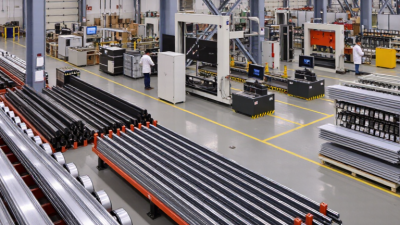
Factory verification adds another layer of confidence. A video call can show production lines, measuring tools, packaging areas, and finished units waiting for inspection. Independent pre-shipment checks are useful for larger orders. Small details reveal discipline: protected corners, sealed electrical parts, accurate dimensions, and labels that match the documentation. Some suppliers may respond quickly but avoid difficult questions. That is a warning sign. Even careful buyers can miss hidden costs, such as custom packaging or replacement fittings. A reliable partner discusses these issues early, although its process may still have small imperfections. Clear correction procedures matter more than unrealistic promises of perfection. Regular quality records and traceable batch information help global buyers manage installation, maintenance, and future purchasing with fewer surprises.
| Evaluation Dimension | Typical Product or Service Scope | Practical Benchmark for Global Buyers | Why It Matters | Recommended Verification Evidence |
|---|---|---|---|---|
| Product Categories | Sectional garage doors, rolling doors, side-hinged doors, door openers, tracks, springs, rollers, seals and safety accessories. | The supplier should clearly define compatible door types, dimensions, load limits and operating conditions for each product. | Clear product segmentation reduces installation errors and makes replacement-part sourcing easier. | Technical catalogues, dimension drawings, parts lists and compatibility charts. |
| Door Panel Construction | Insulated steel or aluminium panels used for residential and light-commercial garage doors. | Common insulated panels use approximately 40–50 mm thickness; the exact value should be confirmed in the approved drawing. | Panel thickness influences thermal insulation, rigidity, noise control and overall door weight. | Panel cross-section drawing, material specification, density data and sample inspection. |
| Thermal Insulation | Foamed polyurethane or similar insulated cores, combined with perimeter seals and bottom seals. | Ask for a declared U-value or R-value tested under a stated method; do not rely only on the phrase “insulated door.” | Declared thermal data allows fair comparison between suppliers and supports energy-efficiency calculations. | Third-party thermal test report, product datasheet and declared calculation method. |
| Corrosion Protection | Galvanized steel hardware, powder-coated panels, aluminium components and corrosion-resistant fasteners. | The coating system should identify substrate, coating type, nominal thickness and intended exposure environment. | Garage doors frequently face humidity, road salt, condensation and outdoor temperature changes. | Coating specification, salt-spray report where applicable, surface-finish sample and inspection standard. |
| Wind Resistance | Reinforced panels, stronger tracks, additional brackets and anchoring systems for exposed locations. | Performance should be stated by wind-load class or design pressure for the installation location, rather than by a generic strength claim. | Wind performance depends on door size, building structure, track configuration and local exposure. | Structural calculations, wind-load test results, installation drawings and anchoring instructions. |
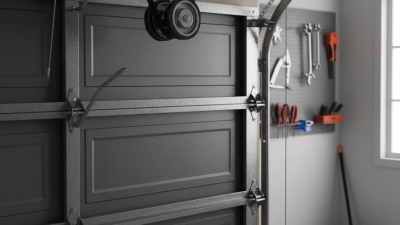
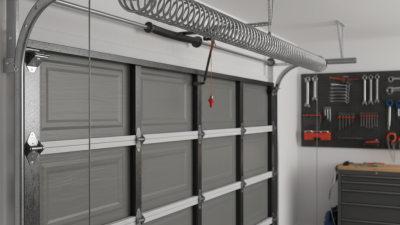
| Operating Hardware | Tracks, hinges, rollers, torsion or extension springs, drums, cables and mounting brackets. | Components should be matched to door mass, dimensions, cycle requirement and opening frequency. | Incorrect spring or roller selection can cause premature wear, unsafe movement or difficult manual operation. | Hardware sizing table, cycle-rating data, spare-parts list and assembly instructions. |
| Cycle-Life Rating | Springs, rollers, hinges, openers and complete door systems designed for different usage frequencies. | Residential systems commonly use a 10,000-cycle reference, while higher-use systems may be specified at 25,000 cycles or more. | Cycle rating helps buyers match the product to daily opening frequency and expected service life. | Cycle-test report, test conditions, replacement schedule and warranty exclusions. |
| Motor and Control System | Ceiling-mounted openers, side-mounted operators, remote controls, wall consoles and optional smart-control modules. | Confirm supply voltage, standby power, duty cycle, travel adjustment, manual release and remote-control frequency for the destination market. | Electrical compatibility and control features vary by country and can affect installation approval. | Electrical datasheet, wiring diagram, user manual and applicable conformity documentation. |
| Safety Protection | Automatic reverse function, photoelectric sensors, emergency release, finger-protection design and obstacle detection. | Powered doors should be evaluated against applicable requirements such as UL 325 in North America or EN 12453 for relevant European applications. | Safety systems help prevent crushing, entrapment and unintended movement during automatic operation. | Safety test report, sensor specifications, risk assessment, installation manual and conformity declaration. |
| Applicable Door Standards | Residential, commercial and industrial door assemblies supplied for different international markets. | For European projects, EN 13241 is commonly relevant to door product performance; market-specific requirements must be confirmed before ordering. | Standards determine testing, documentation, safety functions and market-access obligations. | Standard reference on the quotation, test reports, declaration of performance or declaration of conformity where applicable. |
| Dimensional Accuracy | Custom door leaves, frame openings, tracks, panels and hardware sets. | The final quotation should identify clear opening size, headroom, sideroom, backroom, panel layout and installation tolerances. | Accurate site dimensions are essential for smooth movement, correct sealing and reliable opener operation. | Approved shop drawing, site-measurement form, tolerance schedule and pre-production confirmation. |
| Weather Sealing | Top seals, side seals, bottom astragal seals, panel joints and threshold interfaces. | The sealing design should address water, air, dust and light gaps without restricting normal door movement. | Effective seals improve comfort, cleanliness, energy performance and protection of stored vehicles or equipment. | Section drawings, seal material specification, water-infiltration data where available and installation guidance. |
| Quality-Control Process | Incoming-material inspection, dimensional checks, coating inspection, functional testing and packaging inspection. | A dependable supplier should provide a documented inspection plan with traceable records for critical components. | Process control is more reliable than visual inspection alone and helps reduce batch-to-batch variation. | Inspection and test plan, sample quality records, calibration certificates and pre-shipment inspection report. |
| Packaging and Export Handling | Panel protection, hardware cartons, moisture barriers, reinforced pallets and container-loading procedures. | Packaging should protect painted surfaces, prevent panel deformation and keep small hardware identifiable during transport. | Garage-door components are long, lightweight and vulnerable to impact, moisture and incorrect stacking. | Packing list, loading photos, packaging specification, shipping marks and handling instructions. |
| After-Sales Support | Installation manuals, remote technical support, replacement parts, troubleshooting guidance and warranty handling. | Confirm warranty duration, response time, spare-parts availability and the process for resolving installation or manufacturing defects. | Local installation conditions can create issues that require prompt technical clarification. | Written warranty, service-level terms, spare-parts price list and multilingual documentation. |
| Order and Customization Capability | Standard sizes, custom colours, glazing sections, pedestrian doors, insulated options and project-specific hardware. | Customization should be controlled through approved drawings, revision numbers, sample confirmation and documented change management. | Design changes made after production starts can affect cost, lead time, fit and compliance. | Technical approval workflow, sample sign-off, revision-controlled drawings and production schedule. |
China’s top garage fixers manufacturers differ less in appearance than in production discipline. During factory evaluations, buyers should inspect welding points, coating thickness, fastener accuracy, and load-test records. Strong manufacturers usually control steel sourcing, maintain stable dimensions, and test finished units before packing. A clean workshop helps, but it does not prove everything.
The better suppliers provide drawings, material certificates, inspection photos, and clear tolerance data. Their engineers can adjust mounting holes or frame sizes for different garage layouts. Others offer attractive prices but rely heavily on subcontractors. That can create uneven finishes, missing parts, or delayed replacements. I have seen a sample pass inspection while the bulk order needed correction. That experience is easy to overlook.
Tips: Request one production sample, not only a catalog unit. Ask how rejected parts are recorded. Compare warranty response times, packaging strength, and spare-part availability. Check whether the supplier explains failures honestly. A manufacturer that admits a weak coating batch may be more reliable than one promising perfection. Small details matter. Also review export experience, inspection procedures, and communication speed before signing an order. Price should be compared with service life, not viewed alone.
For global buyers, garage repair equipment must meet documented quality standards, not attractive catalog claims. The ISO Survey 2022 recorded 1,265,216 ISO 9001 certificates across 189 countries, showing its importance in manufacturing control. However, ISO 9001 certifies management systems, not every lift, jack, or workbench.
Ask Chinese manufacturers for current certificates, audit scope, and production records. Check whether the certificate covers the actual factory and product category. A reliable supplier should provide material certificates, weld inspection records, load-test results, and serial-number traceability. Emergency-stop functions and user manuals should also be tested before shipment. Small details matter.
A certificate on a wall is weak evidence.
Relevant product standards may include ISO 12100 for machinery risk assessment and ISO 13849 for safety-related control systems. For European shipments, buyers should also verify applicable conformity documentation and technical files. The ISO Survey 2022 reported 529,853 ISO 14001 certificates, reflecting growing attention to environmental controls. It also recorded 397,339 ISO 45001 certificates for occupational health and safety systems.
Factory experience still matters. During supplier checks, inspect painted surfaces, hydraulic fittings, packaging corners, and calibration labels. Some manufacturers pass audits but overlook final inspection pressure. That gap deserves attention. A pre-shipment test witnessed by the buyer can reveal uneven lifting, oil leakage, or unclear safety labels before containers leave China.
These publication years identify widely used international standards relevant to garage equipment manufacturing, environmental management, occupational safety, automotive quality, and testing competence. Buyers should verify certificate validity, issuing-body accreditation, product scope, and manufacturing-site coverage before purchasing.
Selecting a Chinese garage equipment manufacturer requires more than comparing online prices. Define your needs clearly, including lift capacity, voltage, workspace size, and expected daily use. A repair shop handling heavy vans needs different equipment from a small workshop serving passenger cars. Request technical drawings, material specifications, factory photos, and recent test records. Ask whether the quoted price includes control cabinets, installation tools, spare parts, and protective packaging.
Experience shows that samples reveal problems early. Test one unit before placing a large order. Check welds, hydraulic movement, emergency stops, noise levels, and surface protection. I once saw a low-priced lifting table arrive with thin packaging and scratched components. The supplier corrected it, but the delay damaged the original purchasing plan. Cheap offers can become expensive after rework, storage, and replacement parts.
Verify the manufacturer’s production capacity through a video audit or independent inspection. Confirm business documents, quality procedures, export experience, and after-sales response times. A written contract should state tolerances, inspection rules, payment stages, delivery terms, and remedies for defects. Use pre-shipment inspection before releasing the final payment. Confirm crate dimensions and gross weight with your freight forwarder. Import duties and local certification requirements may vary by destination. That detail is easy to overlook. Keep every drawing, test report, invoice, and packing list organized for customs clearance and future maintenance.